
Your daily productivity isn’t just about working harder—it’s about designing invisible systems that guide your brain toward effortless action and sustainable success.

Imagine waking up each morning and moving through your tasks with the fluidity of a well-rehearsed dance. No mental friction. No decision fatigue. No constant battle against procrastination. This isn’t a fantasy reserved for productivity gurus or neuroscience experts—it’s the natural result of mastering subconscious workflow design.
The concept of subconscious workflow design represents a paradigm shift in how we approach productivity. Rather than relying on willpower and motivation—both finite resources that deplete throughout the day—this approach leverages the brain’s natural tendency to automate repeated behaviors and follow established neural pathways. When you design your workflows with your subconscious mind in mind, you create systems that feel effortless because they align with how your brain actually works.
Most productivity systems fail because they fight against human nature. They demand constant vigilance, unwavering discipline, and superhuman focus. Subconscious workflow design takes the opposite approach: it works with your brain’s architecture rather than against it, creating routines that become as automatic as breathing.
🧠 Understanding the Subconscious Architecture of Productivity
Your subconscious mind processes approximately 11 million bits of information per second, while your conscious mind handles only about 40 bits. This massive disparity reveals an important truth: the vast majority of your daily actions are governed by subconscious processes, not conscious decisions.
When you first learned to drive a car, every action required intense concentration. You consciously thought about checking mirrors, adjusting speed, and turning the wheel. Now, you probably drive to familiar destinations while your mind wanders, arriving without remembering the journey. Your subconscious has taken over.
The same principle applies to your work routines. The goal of subconscious workflow design is to transform essential productivity behaviors from conscious efforts into automatic routines. When you achieve this transformation, productivity stops feeling like work and starts feeling like the natural order of things.
The Neuroscience Behind Automatic Behaviors
Your brain creates neural pathways through repetition. Each time you perform an action in a specific context, you strengthen the connection between that context and that action. This is called context-dependent memory, and it’s the foundation of habit formation.
The basal ganglia, a region deep in your brain, plays a crucial role in this process. It stores patterns and sequences of actions, allowing you to perform complex behaviors without conscious thought. When you design workflows that leverage this natural mechanism, you’re essentially programming your brain for effortless productivity.
🎯 The Five Pillars of Subconscious Workflow Design
Effective subconscious workflow design rests on five fundamental principles that work together to create systems your brain will naturally adopt and maintain.
1. Environmental Architecture: Design Your Physical Space for Success
Your environment acts as an external hard drive for your brain, storing cues that trigger specific behaviors. By intentionally designing your workspace, you can eliminate decision points and create automatic behavioral triggers.
Start by conducting an environmental audit. Look at your workspace and identify every object, tool, or element that requires a decision. Your phone sitting face-up on your desk? That’s a decision point every time a notification lights up. Cluttered papers? Those represent dozens of micro-decisions about what to address first.
The principle of environmental design is simple: reduce friction for desired behaviors and increase friction for undesired ones. Place your most important work tools in arm’s reach. Keep your phone in another room during deep work sessions. Use visual cues like a specific notebook or lighting setup that signals “focus time” to your brain.
2. Temporal Anchoring: Link Tasks to Existing Routines
Time-based scheduling often fails because it requires you to remember and initiate actions. Temporal anchoring is different—it attaches new behaviors to existing habits, creating automatic sequences.
Instead of saying “I’ll work on my important project at 10 AM,” you create an implementation intention: “After I finish my morning coffee, I will open my project file and work for 25 minutes.” The existing habit (finishing coffee) becomes the trigger for the new behavior (starting deep work).
This approach leverages what psychologists call “habit stacking.” Your brain already has strong neural pathways for your existing routines. By piggybacking new behaviors onto these established pathways, you dramatically reduce the activation energy required to start.
3. Decision Pre-Loading: Eliminate Choice Paralysis
Every decision you make depletes your mental resources, a phenomenon known as decision fatigue. Subconscious workflow design eliminates unnecessary decisions by making them in advance, during designated planning sessions when your mental energy is high.
Create decision frameworks for recurring situations. What do you work on first thing in the morning? What’s your process when you feel stuck? How do you prioritize when multiple tasks compete for attention? By establishing clear protocols for these scenarios, you free your conscious mind from constant deliberation.
Many highly productive individuals wear similar clothes every day—not because they lack creativity, but because they understand that clothing decisions consume cognitive resources better spent elsewhere. Apply this principle to your workflows by creating templates, checklists, and standard operating procedures for routine tasks.
4. Sensory Consistency: Create Multi-Modal Triggers
Your brain responds powerfully to sensory cues. By creating consistent sensory environments for specific types of work, you can train your subconscious to automatically shift into the appropriate mental state.
Consider using different sensory markers for different work modes. Perhaps instrumental music with a specific tempo for deep focus work, complete silence for creative brainstorming, and energetic music for administrative tasks. Some people use specific scents, like peppermint for concentration or lavender for relaxation.
The key is consistency. Your brain needs repeated pairings between the sensory cue and the mental state before the association becomes automatic. Once established, these sensory triggers become powerful tools for entering flow states on demand.
5. Progress Visibility: Make Achievement Tangible
Your subconscious mind responds strongly to visible progress. When you can see evidence of your advancement, your brain releases dopamine, reinforcing the behaviors that led to that progress. This creates a positive feedback loop that makes productive behaviors intrinsically rewarding.
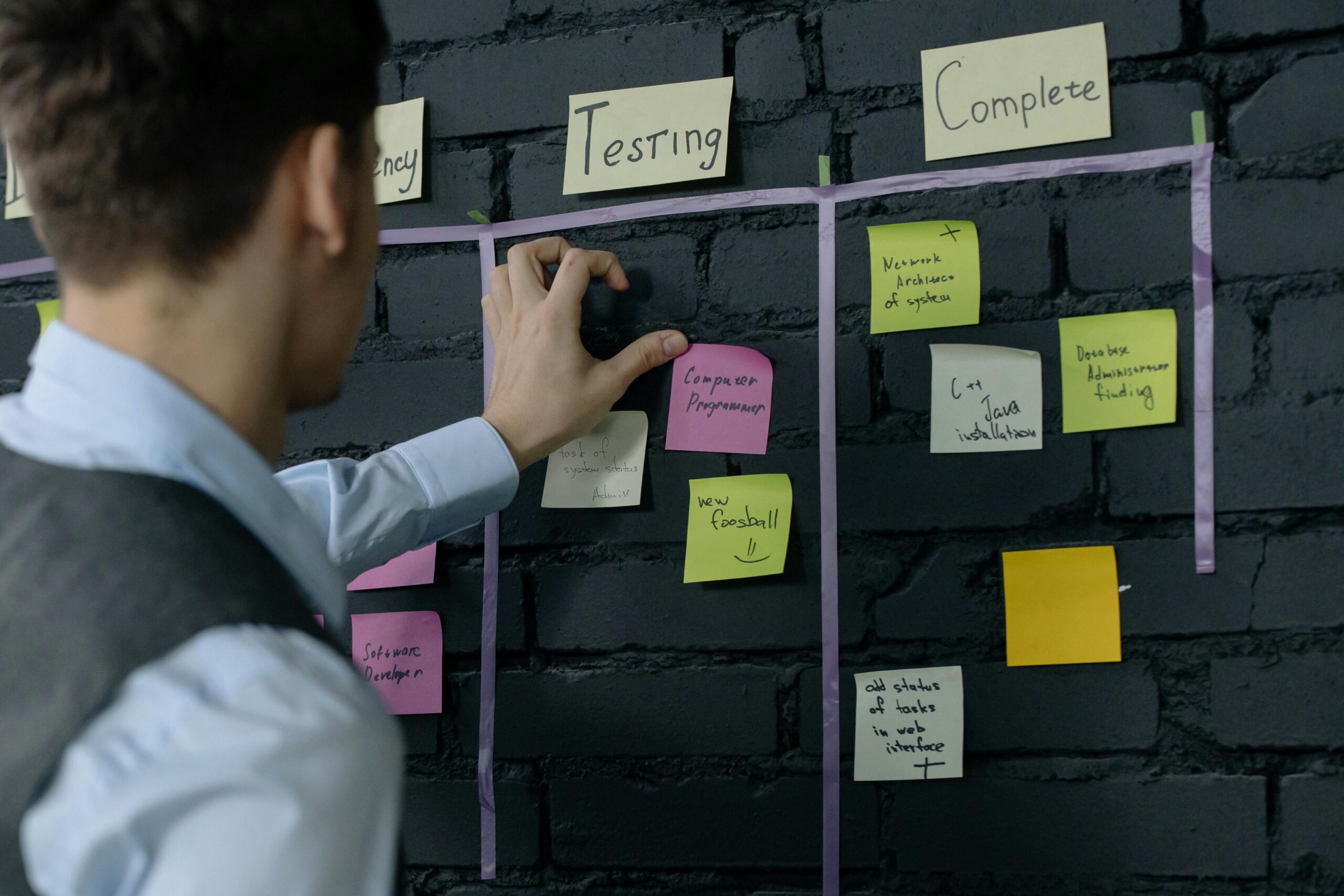
Create systems that make progress visible and tangible. This might be a habit tracker where you mark off completed tasks, a visual representation of your project’s advancement, or even a physical token system where you move an object from one container to another with each completed focus session.
The visibility doesn’t need to be elaborate—simple is often better. The goal is to give your subconscious mind clear signals that your efforts are yielding results, which motivates continued engagement without requiring conscious willpower.
⚙️ Implementing Your Subconscious Workflow System
Understanding the principles is one thing; implementing them is another. Here’s a practical framework for building your personalized subconscious workflow design.
The Seven-Day Foundation Period
Sustainable change happens gradually. Dedicate the first seven days to establishing the foundation of your new system without expecting perfection. During this period, focus on consistency over performance.
Choose one keystone routine—a single workflow that has the greatest impact on your productivity. For many people, this is their morning routine or the transition between waking up and starting work. Design this routine with extreme specificity: same time, same location, same sequence of actions, same sensory environment.
Document every step of this routine in explicit detail. “Start working” is too vague. “Sit at desk, open laptop, launch task management app, review top three priorities, start 25-minute timer, begin work on priority one” is specific enough for your subconscious to encode as a single behavioral unit.
The Thirty-Day Integration Phase
After establishing your foundation routine, spend the next thirty days allowing it to become automatic while gradually adding complementary workflows. Research suggests that habit formation typically requires anywhere from 18 to 254 days, with an average of 66 days—but the first month is critical.
During this phase, track only two metrics: consistency (did you perform the routine?) and ease (how difficult did it feel?). You should notice the ease score improving week by week as the behavior becomes more automatic. If ease isn’t improving after two weeks, your routine might be too complex or fighting against your natural tendencies.
Add new workflows only when existing ones feel relatively effortless. Attempting to overhaul your entire system at once overwhelms your brain’s capacity to form new automatic behaviors. Patience during this phase pays enormous dividends later.
Tools and Technologies That Support Subconscious Design
While the principles of subconscious workflow design are timeless, modern tools can significantly enhance their implementation. The right applications can reduce friction, provide visual feedback, and maintain consistency.
Task management systems that use time-blocking can help establish temporal anchoring. Focus timer applications implement the Pomodoro Technique, which creates clear work/rest cycles that your brain learns to anticipate. Habit tracking apps provide the progress visibility that reinforces behavioral patterns.
For deep focus sessions, applications like Forest gamify concentration by growing virtual trees during distraction-free work periods. This provides both sensory feedback and progress visibility, two key pillars of subconscious workflow design.
Habit tracking becomes effortless with apps like HabitBull, which provide visual streaks and statistics that make your progress tangible. The simple act of checking off a completed habit triggers a small dopamine release that reinforces the behavior.
However, remember that tools are enablers, not solutions. The most sophisticated app cannot compensate for poorly designed workflows. Use technology to support well-conceived systems, not to replace thoughtful design.
🚀 Advanced Techniques for Workflow Optimization
Once you’ve established your foundational workflows, these advanced techniques can take your system to the next level.
Energy Mapping and Task Alignment
Your energy levels fluctuate predictably throughout the day, influenced by circadian rhythms, meal timing, and accumulated cognitive load. Most people experience peak cognitive performance 2-4 hours after waking, with a post-lunch dip, and a secondary (smaller) peak in the early evening.
Track your energy levels hourly for one week, rating your mental clarity, focus capacity, and motivation on a simple 1-10 scale. You’ll likely notice clear patterns. Use this data to align your most demanding cognitive tasks with your peak periods and routine or administrative work with your low-energy windows.
This alignment reduces the conscious effort required for difficult tasks because you’re working with your natural rhythms rather than against them. Your subconscious learns that certain times of day are associated with specific types of work, further automating your workflow transitions.
The Minimum Viable Routine
Perfectionism kills consistency. For each workflow, identify the absolute minimum version that still provides value. This becomes your fallback when circumstances aren’t ideal—and having a fallback prevents the all-or-nothing thinking that derails productivity systems.
Your full morning routine might include exercise, meditation, journaling, and planning. Your minimum viable routine might simply be: drink water, review top three priorities, and begin work on priority one. On difficult days, completing the minimum viable routine maintains the neural pathway while reducing the activation energy to almost nothing.
Context Switching Protocols
Modern work often requires shifting between different types of tasks—deep analytical work, creative brainstorming, communication, and administrative duties. Each requires a different mental state, and abrupt switches between them create cognitive friction.
Design specific transition rituals that signal to your subconscious that you’re changing modes. This might be as simple as standing up, taking three deep breaths, and physically moving to a different location. The ritual itself matters less than its consistency—your brain learns that this sequence means “close the previous context, open the new one.”
Some productivity experts use different physical locations for different work types: one corner for creative work, another for analytical tasks, a third for communications. If space is limited, even changing your sitting position or rotating your chair can serve as a context switch trigger.
🛡️ Protecting Your System from Common Pitfalls
Even well-designed systems face threats. Anticipating and addressing these challenges prevents small issues from cascading into system failure.
The Novelty Trap
New systems feel exciting. Established systems feel routine. Your brain craves novelty, which can lead to constantly tweaking your workflows rather than allowing them to become automatic. Resist the temptation to redesign your system in the first 90 days unless something is clearly not working.
Boredom with your routine is actually a positive sign—it means the behavior is becoming automatic and requiring less conscious attention. Push through this phase rather than seeking the dopamine hit of a new approach.
Environmental Disruptions
Travel, illness, major life changes—these disrupt even well-established workflows. Rather than abandoning your system during disruptions, have contingency versions prepared in advance. What’s your workflow when you’re traveling? When you’re sick? When your schedule is chaotic?
These contingency workflows should be even simpler than your minimum viable routines, focusing on maintaining the neural pathways rather than achieving optimal productivity. The goal during disruptions is preservation, not performance.
Success Complacency
When your system is working beautifully, there’s a tendency to relax the structures that made it effective. You might skip your planning session because “you know what needs to be done” or abandon your environmental cues because “you don’t need them anymore.”
Remember: these structures aren’t training wheels to be eventually removed. They’re the system itself. Your productivity feels effortless precisely because these elements are present and consistent. Removing them reintroduces the cognitive load and decision fatigue you worked to eliminate.
💡 Measuring Success in Subconscious Terms
Traditional productivity metrics—tasks completed, hours worked, output generated—miss the point of subconscious workflow design. The true measure of success is how your work feels, not just what you accomplish.
Evaluate your system using these qualitative indicators: Does starting work feel easier than it used to? Do you find yourself in flow states more frequently? Has the internal resistance to difficult tasks diminished? Do you feel less mentally exhausted at the end of your workday?
These subjective improvements indicate that your workflows are becoming automatic—that your subconscious is successfully carrying more of the cognitive load. Counterintuitively, when productivity feels effortless, you’re probably doing it right.
Track what psychologists call “perceived effort” alongside your output. The ideal trajectory shows increasing output with decreasing perceived effort over time. This pattern confirms that your subconscious workflows are maturing and your system is sustainable.
🌟 The Transformation Beyond Productivity
Mastering subconscious workflow design does more than increase your output—it fundamentally changes your relationship with work. When your daily routines align with your brain’s natural operating principles, work stops feeling like an endless battle against distraction, procrastination, and fatigue.
You reclaim the mental energy previously spent on constant decision-making and self-regulation. This recovered capacity can be directed toward creativity, strategic thinking, and meaningful engagement with your work—the activities that actually move the needle rather than just keeping the wheels turning.
The confidence that comes from reliable systems creates a positive spiral. You trust yourself to follow through because you’ve designed systems that make follow-through the path of least resistance. This trust reduces anxiety about your productivity, which itself improves your productivity—a virtuous cycle that compounds over time.
Most importantly, effective subconscious workflow design creates space for presence. When you’re not constantly managing your productivity through conscious effort, you can be fully present in each task, each interaction, each moment of your day. This presence is not only more pleasant—it’s also more effective, as divided attention is the enemy of quality work.
Your journey toward effortless productivity begins with a single decision: to work with your brain rather than against it. By designing workflows that leverage your subconscious mind’s natural capabilities, you transform daily routines from sources of stress into sources of momentum. The art of subconscious workflow design isn’t about superhuman discipline—it’s about creating systems so well-aligned with human nature that discipline becomes unnecessary. Start small, remain consistent, and trust the process. Your brain is already an extraordinary productivity machine; you just need to program it properly. 🎯